The 2026 RevOps Data Stack: Architecture and Tool Selection
Build a modern revenue operations data stack. Learn the architecture, key tools, integration patterns, and best practices for 2026.
The RevOps data stack has changed a lot. What used to be “buy ZoomInfo, connect to Salesforce” is now an ecosystem of specialized tools, orchestration layers, and real-time workflows.
This guide maps out the modern RevOps data stack and how to build one.
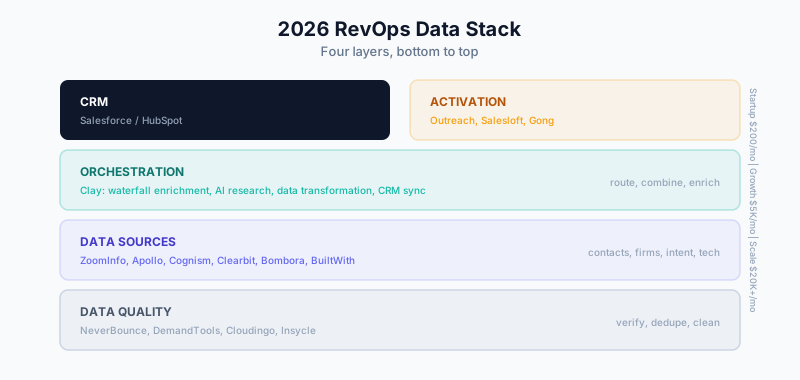
Stack Architecture Overview
┌─────────────────────────────────────────────────────────────────────┐
│                         DATA ACTIVATION                              │
│  ┌─────────────┐  ┌─────────────┐  ┌─────────────┐  ┌─────────────┐ │
│  │  Outreach   │  │  Salesloft  │  │   HubSpot   │  │    Gong     │ │
│  │  Sequences  │  │  Sequences  │  │  Sequences  │  │   Insights  │ │
│  └─────────────┘  └─────────────┘  └─────────────┘  └─────────────┘ │
└─────────────────────────────────────────────────────────────────────┘
                                 ↑
┌─────────────────────────────────────────────────────────────────────┐
│                      CRM (System of Record)                          │
│  ┌───────────────────────────┐  ┌───────────────────────────────┐   │
│  │       Salesforce          │  │          HubSpot              │   │
│  │  • Contacts & Accounts    │  │  • Contacts & Companies       │   │
│  │  • Opportunities          │  │  • Deals                      │   │
│  │  • Activities             │  │  • Activities                 │   │
│  └───────────────────────────┘  └───────────────────────────────┘   │
└─────────────────────────────────────────────────────────────────────┘
                                 ↑
┌─────────────────────────────────────────────────────────────────────┐
│                    DATA ORCHESTRATION                                │
│  ┌─────────────────────────────────────────────────────────────────┐│
│  │                         Clay                                     ││
│  │  • Waterfall enrichment    • AI research                        ││
│  │  • Data transformation     • Workflow automation                ││
│  │  • Multi-source routing    • CRM sync                           ││
│  └─────────────────────────────────────────────────────────────────┘│
└─────────────────────────────────────────────────────────────────────┘
                                 ↑
┌─────────────────────────────────────────────────────────────────────┐
│                       DATA SOURCES                                   │
│  ┌──────────┐ ┌──────────┐ ┌──────────┐ ┌──────────┐ ┌──────────┐  │
│  │ ZoomInfo │ │  Apollo  │ │ Clearbit │ │ Cognism  │ │  Lusha   │  │
│  │          │ │          │ │ /Breeze  │ │          │ │          │  │
│  └──────────┘ └──────────┘ └──────────┘ └──────────┘ └──────────┘  │
│  ┌──────────┐ ┌──────────┐ ┌──────────┐ ┌──────────┐ ┌──────────┐  │
│  │ Bombora  │ │    G2    │ │BuiltWith│ │Crunchbase│ │ LinkedIn │  │
│  │ (Intent) │ │ (Intent) │ │(TechData)│ │(Funding) │ │ (Social) │  │
│  └──────────┘ └──────────┘ └──────────┘ └──────────┘ └──────────┘  │
└─────────────────────────────────────────────────────────────────────┘
                                 ↑
┌─────────────────────────────────────────────────────────────────────┐
│                      DATA QUALITY                                    │
│  ┌──────────────┐  ┌──────────────┐  ┌──────────────┐               │
│  │ NeverBounce  │  │   ZeroBounce │  │   Cloudingo  │               │
│  │ (Email)      │  │   (Email)    │  │   (Dedup)    │               │
│  └──────────────┘  └──────────────┘  └──────────────┘               │
│  ┌──────────────┐  ┌──────────────┐  ┌──────────────┐               │
│  │  DemandTools │  │    Insycle   │  │  RingLead    │               │
│  │  (Salesforce)│  │  (HubSpot)   │  │  (Both)      │               │
│  └──────────────┘  └──────────────┘  └──────────────┘               │
└─────────────────────────────────────────────────────────────────────┘
Stack by Company Stage
Startup ($0-5M ARR)
Budget: $500-2,000/month

CRM:
└── HubSpot Free/Starter

Data Sources:
└── Apollo (primary) — $99/user/mo

Enrichment:
└── Apollo native enrichment

Email Verification:
└── NeverBounce (pay-as-you-go)

Deduplication:
└── HubSpot native tools

Total: ~$100-200/month for a small team
Why this works:
- Apollo provides database + sequences in one
- HubSpot handles CRM without cost
- Minimal integration complexity
- Scales with you
Growth Stage ($5-25M ARR)
Budget: $3,000-10,000/month

CRM:
└── Salesforce Professional or HubSpot Professional

Data Sources:
├── Apollo (prospecting + basic enrichment)
└── ZoomInfo or Cognism (additional coverage)

Orchestration:
└── Clay (waterfall enrichment)

Intent:
└── Bombora or G2

Email Verification:
└── ZeroBounce

Deduplication:
├── Salesforce Duplicate Rules (native)
└── Cloudingo (monthly cleanup)

Engagement:
└── Outreach or Salesloft

Total: ~$5,000-8,000/month
Why this works:
- Multiple data sources for better coverage
- Clay fills gaps and orchestrates
- Intent data prioritizes outreach
- Professional tooling for scale
Scale Stage ($25M+ ARR)
Budget: $15,000-50,000/month

CRM:
└── Salesforce Enterprise

Data Sources (multiple):
├── ZoomInfo (primary)
├── Cognism (EU + phones)
├── Lusha (mobile numbers)
├── Clearbit (firmographics)
└── Apollo (sequences)

Orchestration:
└── Clay Enterprise

Intent Data:
├── Bombora
├── G2
└── 6sense

Tech Intelligence:
├── BuiltWith
└── Slintel

Data Quality:
├── DemandTools
├── Cloudingo
└── RingLead

Engagement:
├── Outreach
└── Gong (intelligence)

Analytics:
├── Clari
└── Tableau/Looker

Total: ~$20,000-40,000/month
Why this works:
- Maximum coverage from multiple sources
- Enterprise-grade quality tools
- Full funnel intelligence
- Dedicated ops team to manage
Component Deep Dives
CRM: The Foundation
Your CRM is the system of record. Everything flows through it.
Salesforce:
- Most customizable
- Best for complex sales processes
- Requires admin expertise
- Higher cost
HubSpot:
- Easier to use
- Better marketing integration
- Growing enterprise features
- Lower TCO for many
Key CRM requirements for data operations:
- API access (for integrations)
- Custom fields (for enrichment data)
- Workflow automation (for triggers)
- Duplicate management (native or add-on)
Data Sources: Coverage is King
No single provider has complete coverage. Plan for multiple sources.
Provider Comparison (2026):

Provider    | Contacts | Direct Dials | EU Coverage | Price
─────────────────────────────────────────────────────────────
ZoomInfo    | 321M+    | Excellent    | Good        | $$$$
Apollo      | 270M+    | Good         | Fair        | $$
Cognism     | 200M+    | Excellent    | Excellent   | $$$
Lusha       | 150M+    | Excellent    | Good        | $$
Clearbit    | 200M+    | N/A          | Good        | $$$

Recommendation:
- US-focused: ZoomInfo or Apollo
- EU-focused: Cognism + Apollo
- Phone-focused: Cognism + Lusha
- Budget-focused: Apollo alone
See individual guides:
Orchestration: Clay as the Hub
Clay has become the de facto orchestration layer:
Clay's Role:

1. Waterfall Enrichment
   - Connect to 100+ data sources
   - Route based on coverage and cost
   - Fill gaps automatically

2. Data Transformation
   - Standardize formats
   - Calculate scores
   - Generate AI insights

3. CRM Integration
   - Push enriched data to Salesforce/HubSpot
   - Trigger on CRM events
   - Bi-directional sync

4. Custom Workflows
   - No-code automation
   - Complex branching logic
   - Multi-step processes
Intent Data: Timing is Everything
Intent data identifies accounts researching your category:
Intent Provider Comparison:

Bombora:
- Largest B2B intent co-op
- Topic-based scoring
- Best for: Account prioritization

G2:
- G2 Crowd buyer intent
- Category-specific
- Best for: Competitor intelligence

6sense:
- AI-powered intent platform
- Full ABM capabilities
- Best for: Enterprise ABM

TrustRadius:
- Review-based intent
- High quality signals
- Best for: Competitive situations
Data Quality: Prevention and Cure
Quality tools fall into two categories:
Prevention (Real-time):
- Salesforce duplicate rules
- HubSpot deduplication
- RingLead (real-time)
Cure (Batch):
- DemandTools (Salesforce)
- Cloudingo (Salesforce)
- Insycle (HubSpot)
Verification:
- NeverBounce (email)
- ZeroBounce (email)
- Phone verification services
Integration Patterns
Pattern 1: Hub and Spoke
Clay (or similar) as central hub:
            ┌─────────┐
            │  CRM    │
            └────▲────┘
                 │
     ┌───────────┴───────────┐
     │         Clay          │
     └───────────┬───────────┘
        ┌────────┼────────┐
        ▼        ▼        ▼
   ┌────────┐┌────────┐┌────────┐
   │ZoomInfo││ Apollo ││Cognism │
   └────────┘└────────┘└────────┘
Pros:
- Centralized control
- Easy to modify workflow
- Clear data lineage
Cons:
- Single point of failure
- Adds latency
- Clay dependency
Pattern 2: Direct Integration
Each tool connects directly to CRM:
   ┌────────┐     ┌────────┐     ┌────────┐
   │ZoomInfo│     │ Apollo │     │Cognism │
   └───┬────┘     └───┬────┘     └───┬────┘
       │              │              │
       ▼              ▼              ▼
   ┌─────────────────────────────────────┐
   │               CRM                    │
   └─────────────────────────────────────┘
Pros:
- Simpler architecture
- Lower latency
- Fewer dependencies
Cons:
- Duplicate management harder
- No waterfall capability
- Multiple integrations to manage
Pattern 3: Event-Driven
Real-time events trigger enrichment:
CRM Event → Event Bus → Enrichment → CRM Update

Technologies:
- Salesforce Platform Events
- HubSpot Workflows + Webhooks
- Kafka/SQS for scale
See Event-Triggered Enrichment for details.
Build vs Buy Decisions
Build When:
- You have unique data needs
- You need deep customization
- You have engineering resources
- Volume justifies investment
Buy When:
- Standard use cases
- Limited engineering
- Need to move fast
- TCO is lower than build
Hybrid Approach:
Buy:
- Data sources (ZoomInfo, Apollo)
- CRM (Salesforce, HubSpot)
- Basic enrichment

Build:
- Custom scoring models
- Unique workflow logic
- Proprietary data processing

Orchestrate:
- Clay for no-code workflows
- Custom code for complex logic
Implementation Roadmap
Phase 1: Foundation (Month 1-2)
Week 1-2: CRM Setup
- Configure objects and fields
- Set up duplicate rules
- Define data model

Week 3-4: Primary Data Source
- Implement ZoomInfo or Apollo
- Configure CRM sync
- Test enrichment flow

Week 5-6: Basic Workflows
- Lead routing with enrichment
- Basic scoring
- Activity logging
Phase 2: Expansion (Month 3-4)
Week 1-2: Add Orchestration
- Implement Clay
- Build waterfall enrichment
- Connect additional sources

Week 3-4: Add Intent
- Implement Bombora or G2
- Create intent-based workflows
- Build account prioritization

Week 5-8: Quality Tools
- Implement deduplication
- Email verification
- Ongoing quality automation
Phase 3: Optimization (Month 5-6)
Week 1-4: Measurement
- Build ROI dashboards
- Track coverage metrics
- Measure quality scores

Week 5-8: Optimization
- A/B test workflows
- Optimize provider mix
- Reduce costs
- Improve coverage
Common Mistakes
Mistake 1: Too Many Tools, Too Fast
Wrong:
Week 1: Buy ZoomInfo, Apollo, Cognism, Lusha, Clay, Bombora...

Right:
Month 1: One primary source + CRM
Month 3: Add orchestration
Month 5: Add secondary sources
Month 7: Add intent
Mistake 2: No Data Quality Foundation
Wrong:
Focus on adding more data, ignore duplicates and decay

Right:
Implement quality tools BEFORE adding more data sources
Clean existing data BEFORE enriching
Mistake 3: Over-Automating Early
Wrong:
Build complex automated workflows immediately

Right:
Start with manual processes
Learn what works
Then automate
Mistake 4: Ignoring Data Decay
Wrong:
"We enriched everything last year, we're good"

Right:
[70% of data decays annually](/blog/b2b-data-decay-problem)
Continuous enrichment is required
Budget for ongoing refresh
Measuring Stack Effectiveness
Key Metrics
Data Coverage:
- % of records with email: Target >95%
- % of records with phone: Target >60%
- % of records with full firmographics: Target >80%

Data Quality:
- Duplicate rate: Target <5%
- Email bounce rate: Target <3%
- Phone connect rate: Target >40%

Efficiency:
- Time to enrich new lead: Target <60 seconds
- Research time per account: Target <5 minutes
- Cost per enriched record: Track and optimize

Business Impact:
- Conversion rate improvement
- Pipeline velocity change
- Win rate change
Stack Health Dashboard
RevOps Data Stack Health

Overall Health: 92% ✓

Data Sources:
├── ZoomInfo: Connected ✓
├── Apollo: Connected ✓
├── Clay: Connected ✓
└── Bombora: Connected ✓

Quality Metrics:
├── Duplicates this week: 47 (within tolerance)
├── Email bounces: 2.1%
└── Phone disconnects: 3.4%

Coverage:
├── New leads enriched: 98%
├── Accounts with intent: 34%
└── Contacts with phone: 67%

Cost Efficiency:
├── Cost per enrichment: $0.23
├── Credits remaining: 15,000
└── Projected overrun: None
Related Guides
- Modern Outbound Data Stack — Outbound-specific architecture
- Clay 101 — Orchestration platform
- Waterfall Enrichment — Multi-source enrichment
- Enrichment ROI Calculation — Measure stack value
- The B2B Data Decay Problem — Why continuous enrichment matters